

Audiomack: Music Downloader
Audiomack Music Apps
I noticed Audiomack: Music Downloader because it promises something more practical than simply playing songs: it lets me download full tracks, keep listening offline, and build as many playlists as I need. After spending time with it as a music and audio app, I found that its strongest appeal is immediate. It is easy to start using, it feels designed for regular listening rather than occasional browsing, and it can become useful very quickly when I want music available without relying on a constant connection.
That first impression matters, but I do not think a music app earns a permanent place on a phone just because its first session is enjoyable. The more important question is whether it continues to fit naturally into everyday routines after the novelty disappears. In my experience, this app has real staying power for listeners who like discovering and saving music, especially when offline playback is important. It is less convincing for people who already have a carefully organized library elsewhere or who expect every release and every artist to be available in one perfectly uniform catalog.
From an easy first week to a useful listening habit
The opening experience is straightforward. I can search for music, start listening, and decide which tracks deserve a place in my own collection. The main advantage is that the app does not force me to treat streaming as the only way to listen. Once I download music, I can return to it when traveling, commuting, or dealing with an unreliable connection. That makes the service feel more like a personal listening tool than a temporary window into a catalog.
Related News

Audiomack: Music Downloader – Your Weekly Soundtrack Revolution

Kwai: The Video App Transforming Social Interaction This Week

Spotify's Secret Sauce: How It Dominates Music and Podcasts
I also like the way unlimited playlists change the first-week experience. Instead of putting everything into one oversized collection, I can separate music by purpose: a short morning queue, a focused work playlist, a group of discoveries, or something reserved for offline listening. This sounds simple, but it reduces the friction of deciding what to play. A playlist can be built around a mood or routine rather than around a complete album, which suits people who listen in short bursts throughout the day.
The app comes from Audiomack Music Apps, and its identity is clearly centered on music discovery and access rather than on being a general-purpose media player. That focus helps it feel less cluttered than services that try to combine music, podcasts, video, social activity, and radio in the same space. I can open it with a specific listening goal and get to music without navigating through unrelated entertainment.
Related News

Instagram Is No Longer a Photo App. It Is an Attention Engine

Microsoft Teams Mobile: When Collaboration Becomes Navigation

How the NFL App Adapts to Android and iOS Updates

Temu: Elevate Your Shopping Experience to Billionaire Status

Why Traffic Rider Works Best as a Precision Reflex Game

How Google’s Find Hub Transforms Everyday Searches
Its popularity also gives a new user some reassurance. The app has passed 100 million installs, carries an average rating of 4.8, and has received millions of ratings. Those figures do not guarantee that it will match my taste, but they suggest that the basic experience works for a very large audience. I would still judge it by my own listening habits, because a highly rated music service can remain unsuitable if its catalog or workflow does not fit me.
One of the best first-week habits is to download selectively instead of saving everything immediately. I prefer to listen to a track once or twice before deciding whether it belongs in my offline collection. This keeps the app more manageable and makes downloaded music feel intentional. It also helps separate songs I am merely curious about from the ones I expect to replay.
A realistic example is a weekday commute. I can spend a few minutes at home choosing a playlist, download the tracks I want, and then listen during the journey without treating mobile coverage as part of the plan. If I later find a better song, I can add it to a discovery playlist rather than interrupting the playlist I already prepared. That small separation makes the app more useful than a single endlessly changing queue.
Gallery
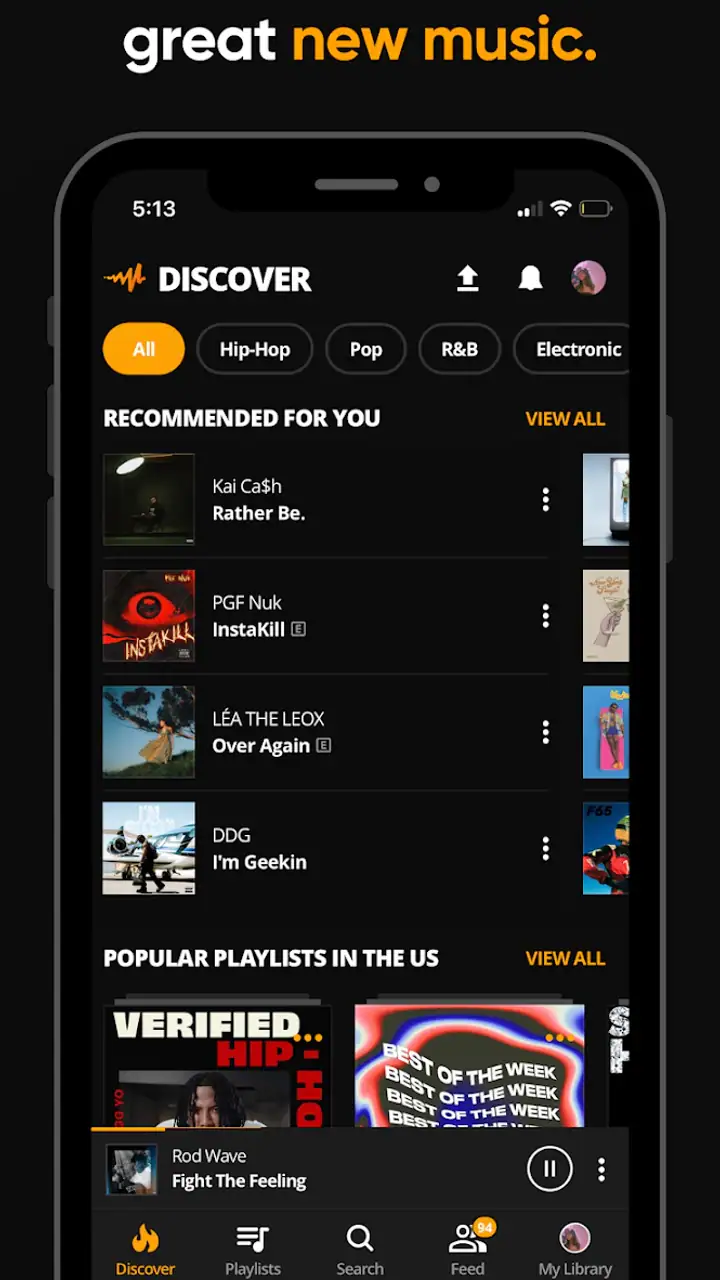
There is also a practical answer to a question many new users have: is it useful without downloading everything? Yes, because downloading works best as a preparation step rather than as the entire purpose of the app. I can still browse and listen normally, then reserve offline storage for commutes, trips, or places where connectivity is uncertain. The choice between online discovery and offline reliability is one of the app’s most valuable everyday strengths.
Why the appeal can last beyond the first few days
The first-week excitement comes from finding new music, but the recurring value comes from turning those discoveries into repeatable listening routines. I find that playlists are more valuable when they are treated as working tools. A playlist for concentration should not be mixed with a playlist for exercise, and a temporary collection of new finds should be allowed to remain temporary. This approach prevents the library from becoming a confusing pile of tracks that I never revisit.
The ability to listen offline is especially useful for people who move between predictable locations. Someone who takes the same train, works in a building with poor reception, or travels regularly can prepare listening in advance and avoid making a network connection part of every session. I would not describe this as a glamorous feature, but it is the kind of convenience that can keep an app installed month after month.
Another useful workflow is to use one playlist as an inbox for discoveries. I can place unfamiliar tracks there, listen over several days, and then move the songs I genuinely like into more permanent playlists. This avoids the common problem of downloading a song after one promising moment and forgetting why it was saved. It also gives the app a clearer role in my routine: discovery first, organization later.
For listeners who enjoy following music outside the most obvious mainstream choices, the experience can feel more rewarding than a service built only around familiar names. I would still expect catalog differences, and I would not assume that every artist, version, or release will appear exactly when I want it. The app is strongest when I am willing to explore rather than when I arrive with a rigid demand for one specific, complete catalog.
The free price makes experimentation easy. I can try the app without committing money at the start, which is important when the real question is whether its music selection and organization suit me. There are in-app purchases ranging from 59 cents to $24.99 per item, so I would pay attention to any purchase screen and decide whether an optional upgrade adds enough value to my own routine. The free entry point is a genuine advantage, but it does not remove the need to understand what I am choosing to buy.
The monthly value depends on how deliberately I use it
After the initial enthusiasm fades, the app’s value depends less on searching and more on maintenance. Music libraries become useful when they reflect actual listening behavior. I get more from the service when I regularly remove tracks that no longer interest me, refresh playlists that have become stale, and keep offline downloads limited to music I am likely to hear again.
This is where Audiomack: Music Downloader feels different from a passive radio app. A radio-style service can be convenient when I do not want to make decisions, while this app rewards me for taking a little ownership of what I save. That is a strength for listeners who enjoy building collections, but it can feel like extra work for anyone who wants an algorithm to handle every choice.
I would recommend creating playlists with a clear job rather than naming them only by vague mood. For example, a playlist intended for a short walk should have a manageable length, while an offline travel playlist can be broader. Clear purposes make it easier to notice when a playlist has stopped being useful. They also make the unlimited-playlist capability more practical, because I can create several focused collections without worrying about fitting everything into one list.
The app can also support a gradual discovery process. Instead of judging a new artist from one track, I can save a few promising songs, return to them on different days, and decide which ones deserve repeat status. This is a better long-term workflow than downloading every recommendation immediately. It reduces clutter and gives me a clearer sense of what I actually enjoy.
One question a potential user may have is whether offline listening makes the app suitable for travel. In my view, yes, provided I prepare before leaving and check that the tracks I want are available for offline playback. The important habit is preparation: I would not wait until a station, airport, or remote road to build the collection. The app is most dependable as part of a routine in which downloads are refreshed before they are needed.
The service is also a reasonable option for someone who wants a separate music space on a phone. I can use it for discovery and offline playlists without reorganizing every other audio habit I already have. That separation may appeal to listeners who want one app for familiar albums and another for finding less predictable music. On the other hand, people who want one universal library with identical controls across every listening source may find a split setup inconvenient.
Maintenance is manageable, but it is not invisible
The main maintenance burden is not complicated setup; it is keeping saved music purposeful. Downloads can become outdated as my taste changes, and playlists can grow faster than I expect. If I never review them, the app may still function, but the experience becomes less personal. I spend less time enjoying music and more time skipping tracks that no longer belong in the queue.
I find a short review every few weeks more effective than a major cleanup after months of neglect. I can remove songs I always skip, move promising discoveries out of the temporary playlist, and prepare a fresh offline selection for the next stretch of travel or commuting. This keeps the app feeling active without turning music organization into a separate hobby.
Storage is another practical consideration. Offline tracks are useful, but I would not download entire collections simply because the option exists. A smaller selection is easier to browse and less likely to contain forgotten songs. People with limited phone storage should be particularly selective, while listeners with plenty of room may still benefit from keeping downloads organized by purpose.
There is also a difference between keeping a playlist and keeping a habit. A large collection can look impressive but remain unused. I prefer a few playlists that I can identify immediately, supported by one temporary space for new discoveries. That structure makes the app quicker to open and reduces the feeling that I need to manage a database before I can listen.
The age classification is Teen, which is worth considering for families deciding whether the app fits a younger listener. I would still treat the app as a music-discovery environment that deserves ordinary parental awareness, especially because individual musical preferences and content can vary. The rating label is useful context, but it is not a substitute for deciding what a particular teenager should listen to.
Where fatigue begins after the novelty fades
The biggest source of fatigue is repetition caused by my own organization. If I keep adding tracks without removing anything, even a good catalog can start to feel stale. The solution is not necessarily to abandon the app; it is to give playlists clearer boundaries and allow temporary collections to end. Still, users who dislike this kind of upkeep may prefer a more automated listening service.
Another possible frustration is catalog expectation. Audiomack works well for exploration and saved listening, but I would not choose it solely because I assume it will replace every other music source. If I need a particular release, a complete discography, or a highly standardized album experience, I would compare availability before moving my entire listening life here. A service with a broader or more predictable catalog may be the better primary option for that use case.
The free model can also create a different kind of decision fatigue. The app is easy to try, but optional in-app purchases mean I should not treat every extra prompt as automatically necessary. I would first use the free experience long enough to understand whether downloads, playlists, discovery, and offline playback already solve my problem. Paying makes sense only when the added benefit is clear in my own routine.
Listeners who want podcasts, audiobooks, radio stations, and music under one tightly unified interface may also feel that this app is narrower than their ideal. Its focus is part of its charm, but focus can feel like a limitation when I want one destination for every kind of audio. In that situation, a broader audio platform may be more convenient even if it is less concentrated on music discovery.
I also would not recommend it to someone who never wants to curate anything. The app can be simple at the beginning, but its strongest long-term experience comes from choosing what to keep, what to download, and how to arrange playlists. If my perfect music service is one that makes every decision for me, I am likely to appreciate a recommendation-first alternative more.
My long-term verdict on keeping it installed
For me, Audiomack: Music Downloader earns lasting space when I use it as a combination of discovery tool and prepared offline library. Its best qualities are not limited to the first search session. The ability to download full tracks, listen without a connection, and create unlimited playlists gives it recurring value for commutes, travel, focused work, and casual exploration.
The app is free to start, comes from Audiomack Music Apps, and has been available since January 8, 2015. Its large user base and strong average rating make it an easy service to try, but I would still make the decision based on catalog fit and personal workflow rather than popularity alone. The most satisfied users are likely to be people who enjoy discovering music and are willing to keep their saved collection reasonably tidy.
My practical recommendation is to test it with a small routine: create one discovery playlist, prepare one offline playlist, and use both for a week of normal listening. Then notice whether the app saves time or creates more sorting work. If offline access becomes part of your commute or travel preparation, the app has probably earned a permanent role. If you keep searching for missing releases or dislike managing playlists, another music service may suit you better.
In the end, I see this as a dependable music companion rather than a universal answer to every audio need. It does not have to replace every service to be worthwhile. Its lasting advantage is that it turns music discovery into something I can organize and carry into places where streaming is inconvenient. If that combination matches your routine, it is one of the more practical free music apps to keep around.
FAQs for Audiomack: Music Downloader
What is Audiomack and how does it work?
Audiomack is a music streaming and downloading app that offers free access to millions of tracks from various genres. Users can stream music online or download it for offline listening, making it convenient for areas with limited internet connectivity. The app is available on both Android and iOS platforms.
Is Audiomack free to use, and are there any premium features?
Audiomack is free to download and use, providing access to a vast library of music without any cost. However, it also offers a premium subscription called Audiomack Premium, which removes ads, provides higher-quality audio, and offers additional features like offline playback without limits.
Can I upload my own music to Audiomack?
Yes, Audiomack allows artists to upload their music for free. This feature is beneficial for independent musicians seeking exposure. Artists can create an account, upload tracks, and share their music with a broad audience, helping them to grow their fanbase and gain traction without any upfront fees.
Is the music on Audiomack licensed and legal to download?
Audiomack hosts music that is either uploaded by artists themselves or provided through agreements with rights holders. This ensures that the content is legal. However, users should check the specific licensing terms for each track, especially if they plan to use it for commercial purposes.
Does Audiomack work offline, and how can I download music?
Yes, Audiomack supports offline listening. Users can download tracks by tapping the download button next to each song. This is particularly useful for listening without an internet connection. Offline downloads are available for both free and premium users, though premium users enjoy an ad-free experience.
Pros
- Free access to a vast music library.
- Offline listening with no data use.
- User-friendly interface and navigation.
- Regular updates with new tracks.
- Personalized playlists and recommendations.
Cons
- Ads can be intrusive at times.
- Some tracks require a paid subscription.
- Limited offline downloads for free users.
- Occasional app crashes reported.
- Not all artists available on platform.


